
 当前位置:
当前位置:Pyroelectric and Photovoltaic Surface Potential in Ferroelectrics:New Applications for Molecule Manipulation, Solar Cell and Crystal Accelerator
Seminar
Key Laboratory of Inorganic Functional Material and Device, CAS
Shanghai Institute of Ceramics, Chinese Academy of Sciences
中国科学院无机功能材料与器件重点实验室
Pyroelectric and Photovoltaic Surface Potential in Ferroelectrics:
New Applications for Molecule Manipulation, Solar Cell and Crystal Accelerator
Speaker: Prof. Kenji Kitamura
National Institute for Materials Science (NIMS), Japan
时间:2011年11月1日(星期二)上午09:00
地点: 4 号楼 14楼第一会议室
联系人:曾华荣研究员、殷庆瑞研究员
Abstract:
LiNbO3 (LN)and LiTaO3 (LT) crystals are typical ferroelectric materials possessing excellent piezo-electric, pyro-electric, opto-electric, photovoltaic and non-linear optical properties. There is no material except them which has been studied and applied in so wide fields.
Recently, surface potential induced by their pyrolelctric, photovoltaic and domain wall effects has been deserving our attention. They have a potential of emitting electrons; electron energies up to 105 eV and electric fields as high as 106 Vcm-1, it is currently applied to infrared sensors, X-ray generators, neutron generators, and tabletop nuclear fusion systems using their large pyroelectricity.
Besides, they have a strong effect on reactivity on their polar surfaces. By combining domain patterning with domain-specific reaction, we demonstrated metallic nanostructures and nanopartilces and their new applications. Moreover, ferroelectric-solar cell hybrid devices are becoming attractive.
In this talk, such new prospects using surface potential on polar materials will be reviewed by showing our recent results related with them.
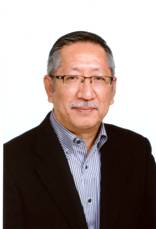
Prof. Dr. Kitamura joined the National Institute for Research in Inorganic Materials, Japan (1974; one of the predecessor institutions of NIMS) and became Senior Researcher in the same institute (1983). Meanwhile, he worked at CNRS in France as a visiting researcher from 1983 to 1984. He was appointed Director of the Advanced Materials Laboratory, NIMS (2001) and Managing Director of the Optronic Materials Center, NIMS (2006~2007),a new Fellow of NIMS (2007), a visiting professor of University of Washington (2010). He was awarded the 17th Tsukuba Prize (2005), the 33th INOUE-HARUSHIGE Prize (2007) from Japan Science and Technology Agency, The 3rd Special prize for NIHON Monozukuri, Ministry of Economy, Trade & Industry of Japan (2009).
He has an impressive record of achievements in connection with the growth and characterization of optical single crystals and processing of these materials as devices, and in particular, in research on the defects and properties of ferroelectric single crystals publishing more than 300 papers so far. He is also actively involved in the management of venture companies with the aim of utilizing research outcomes. Recently, he has been involved in developing infra-red and terahertz light sources, X-ray generator, biosensors using ferroelectric materials and devices he originally developed.