
 当前位置:
当前位置:Total Performance of Magneto-Optical Ceramics with Bixbyite Structure

Total Performance of Magneto-Optical Ceramics with Bixbyite Structure
Recently fiber laser of near 1µm wavelength has been growing in the market substituting CO2 and YAG lasers owing to its higher power exceeding 100W and higher precision in cutting and welding under µm level. In fiber laser, isolators are normally equipped as a key optical component. Conventionally Terbium gallium garnet (TGG:Tb3Ga5O12) single crystal has been used for the material of the isolator.
However, because of the small Verdet constant of TGG (36~40rad/T•m), the length of TGG is 20mm under magnetic field of 1T and the isolator has been difficult to miniaturize further. Maximizing Tb concentration is important to achieve high performance of the isolator. We have carried out various studies and have discovered that the most promising crystal structure is Bixbite (i.e., TYO ((TbxY1-x)2O3, x=0.5~1.0).
We have succeeded in the development of TYO ceramics which has 3.8 times higher Verdet constant than that of TGG crystal with other optical characteristics for practical application.
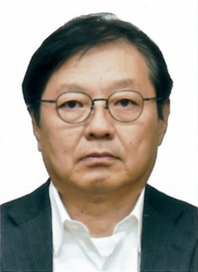 Dr. Akio Ikesue was born in Japan in 1958. He received his B.E., M.E., and Dr. Eng. degrees in Materials Science and Technology from Nagaoka University of Technology, Japan, in 1981, 1983 and 1996, respectively. He worked as a research scientist at Kurosaki Refractory Co., FANUC Co., and Japan Fine Ceramics Center (1999-2005). Now he is chief officer of World Lab. Co. (Nagoya, Japan). He also held the positions of an executive scientist at SCHOTT AG (Mainz, Germany), and invited professor at Pierre and Marie Curie University (Paris 6, Paris France), guest professor in SICCAS (Shanghai Institute of Ceramics) and PIFI scientist in CAS (Chinese Academy of Science).
In 1995, he succeeded in fabricating the optical grade polycrystalline neodymium (Nd)-doped Yttrium Aluminum Garnet (YAG) ceramic for the first time in the world, and pioneered the high efficiency laser generation using polycrystalline ceramics. He is the recipient of numerous awards including Progress Award from laser society of Japan in 2001, 2005, Technical Promote Award of Japan Ceramic Association in 2002, Fulrath Award from the American Ceramic Society in 2003 and Photonics and Quantum Electronics Award from the Applied Physics Society of Japan in 2007. Otto-Schott Research Award from Ernst-Abbe Funds in 2008, and fellow from American Ceramic Society in 2009, Kato Memorial Award in 2022 and Okura Award in 2024. He is author of more than 100 technical publications.